
Psoriasis is far more than just a surface-level skin issue; it is a chronic, autoimmune condition that affects millions globally, significantly impacting quality of life. For those in Peshawar, Kohat, and Swabi searching for expert dermatological care, understanding the complexities of this condition is the first step toward effective management. This comprehensive guide, from the website of Dr. Fahad Faizullah, a leading Dermatologist in Peshawar, will delve deep into the signs, causes, various types like Plaque Psoriasis, and the cutting-edge Psoriasis Treatment options available for managing this lifelong Skin Disease. Effectively treating and controlling this condition requires an individualized approach, and our aim is to equip you with the knowledge to seek the specialized care you need.
Table of Contents
What is Psoriasis? A Detailed Overview
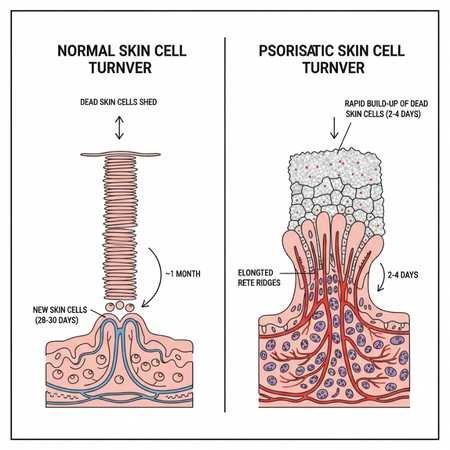
The immune-mediated Skin Disease known as Psoriasis is characterized by the rapid buildup of skin cells. In a healthy individual, skin cells mature and shed over a typical cycle of about 28 to 30 days. However, in someone with the condition, this cycle is drastically accelerated, taking only three to four days. This hyperactive cell production results in thick, scaly, and often itchy or painful patches on the skin’s surface. These patches, known as plaques, are the hallmark sign, though the appearance can vary greatly depending on the individual’s skin tone and the specific type of the disease.
The underlying cause is a dysfunction in the immune system. Specifically, T-cells—a type of white blood cell—mistakenly attack healthy skin cells, triggering inflammation and accelerated cell growth. The condition can manifest anywhere on the body, from the scalp and nails to the joints, where it can lead to a related condition called Psoriatic Arthritis. Early diagnosis and ongoing management by a specialist like a Dermatologist Peshawar are crucial to control the inflammatory response and prevent the progression of symptoms, minimizing the risk of associated comorbidities.
Types of Psoriasis
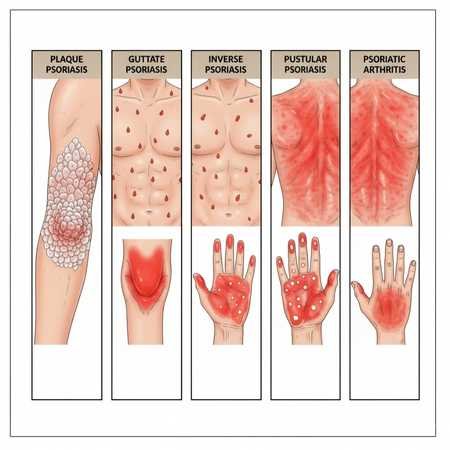
While Psoriasis is the general term, this chronic condition manifests in several distinct forms. Accurate identification of the type is essential for determining the most effective Psoriasis Treatment.
Plaque Psoriasis (Psoriasis Vulgaris)
This is the most common form, affecting around 80-90% of those with the condition. It is characterised by raised, red, or discoloured patches (Plaque Psoriasis lesions) covered with a silvery-white or grey buildup of dead skin cells. These plaques typically appear on the elbows, knees, scalp, and lower back. They can be itchy and painful, and in severe cases, the skin may crack and bleed.
Guttate Psoriasis
Often triggered by a bacterial infection like streptococcus throat, Guttate Psoriasis is marked by small, teardrop-shaped spots that appear on the trunk, arms, legs, and scalp. It is more common in children and young adults. In some cases, it may clear up on its own, but it can also evolve into a chronic form.
Inverse Psoriasis (Flexural Psoriasis)
This type primarily affects the skin folds, such as the armpits, groin, under the breasts, and around the genitals. It causes smooth, inflamed patches of skin that are red or dark in color, lacking the typical scaling found in Plaque Psoriasis. Friction and sweating can worsen Inverse symptoms, making a precise treatment plan vital.
Pustular Psoriasis
A less common but potentially serious form, Pustular Psoriasis, is characterised by clearly defined, pus-filled bumps (pustules) surrounded by red or discoloured skin. It can be localised to the palms of the hands or soles of the feet (palmoplantar pustulosis) or spread across the body (generalised pustular disease), which requires immediate medical attention from a specialist.
Erythrodermic Psoriasis
This is the rarest and most severe form of Psoriasis. It can cover nearly the entire body with a fiery-red, peeling rash that can itch or burn intensely. Erythrodermic Psoriasis can disrupt the body’s temperature regulation and may lead to serious complications, necessitating urgent intervention from a qualified specialist or a Dermatologist in Kohat or Peshawar.
Nail Psoriasis
The condition can also affect the fingernails and toenails, leading to pitting, discolouration, crumbling, or the nail separating from the nail bed (onycholysis). This condition is often present alongside other types of Psoriatic Arthritis.
The Causes and Triggers of Psoriasis
While the exact cause of Psoriasis is still being researched, it is widely accepted that the condition results from a complex interplay of genetic, immunological, and environmental factors. It is an immune-mediated Skin Disease, meaning the immune system plays a central, misdirected role. Understanding these factors is key to effective management and minimising flare-ups.
Genetic Predisposition
Genetics is a major risk factor for developing the condition. Having a close family member with the condition significantly increases your likelihood of developing it. Specific genes are thought to make an individual more susceptible to the immune system overreaction that defines Psoriasis.
Immunological Factors
The fundamental problem involves T-cells. These cells, intended to defend the body against infection, mistakenly activate an inflammatory response in the skin. This chronic inflammation drives the rapid growth and accumulation of skin cells seen in plaques. Advanced Psoriasis Treatment options, particularly biologics, are designed to target these specific immune pathways to restore balance.
Environmental and Lifestyle Triggers
A flare-up can often be traced back to a specific trigger. Identifying and managing these triggers is a cornerstone of living successfully with this Skin Disease. Common triggers include:
- Infections: Bacterial infections, most commonly strep throat, are frequent triggers for the Guttate type.
- Skin Injury (Koebner Phenomenon): Injuries to the skin, such as cuts, scrapes, severe sunburn, or even tattoos, can cause plaques to develop at the site of the injury.
- Stress: High levels of psychological stress are a well-documented trigger for flares. Managing stress through lifestyle modifications is an important part of holistic management.
- Medications: Certain prescription drugs, including lithium, some blood pressure medications (beta-blockers), and antimalarial drugs, have been known to worsen or induce symptoms.
- Smoking and Alcohol: Both are linked to an increased risk of developing the Skin Disease and can also exacerbate the severity of existing Psoriasis.
- Weather: Cold, dry weather tends to worsen symptoms, while moderate, controlled sun exposure can sometimes be beneficial (under a doctor’s guidance).
Navigating these triggers requires the guidance of an experienced professional, like a Dermatologistin Peshawar, who can customise a management plan to your specific lifestyle and form.
Advanced Psoriasis Treatment Options
While there is currently no cure for Psoriasis, modern medicine offers a wide range of highly effective Psoriasis Treatment options that can clear the skin and significantly improve quality of life. The choice of treatment depends on the severity and type of the condition, the location of the plaques (such as Plaque Psoriasis on the elbows), and the presence of associated conditions like Psoriatic Arthritis.
1. Topical Therapies
These are often the first line of defense for mild to moderate forms, particularly Plaque Psoriasis. Applied directly to the affected areas, they work to slow down skin cell growth and reduce inflammation.
- Corticosteroids: Reduce inflammation and suppress the immune response.
- Vitamin D Analogues: Slow skin cell growth.
- Topical Retinoids: Normalize abnormal skin cell growth.
- Coal Tar and Anthralin: Older treatments that slow cell growth and reduce scaling.
2. Phototherapy (Light Therapy)
Phototherapy involves exposing the skin to specific wavelengths of ultraviolet (UV) light under medical supervision. This is a very effective Psoriasis Treatment for moderate to severe cases or when topical treatments are insufficient.
- Broadband and Narrowband UVB: These forms of UV light slow the rapid growth of skin cells.
- PUVA (Psoralen plus UVA): A medication is used before UVA light exposure to make the skin more responsive to the light.
3. Systemic Medications (Oral and Injectable)
For severe Psoriasis, widespread disease, or when Psoriatic Arthritis is involved, systemic treatments are necessary. These medications work throughout the body.
- Traditional Systemics: These medications suppress the immune system or interfere with skin cell production. They are powerful but require regular monitoring.
- Biologic Drugs: Representing a major breakthrough in Psoriasis Treatment, biologics are injected or infused medications that target specific parts of the immune system responsible for the inflammation in Psoriasis and Psoriatic Arthritis. Biologics offer highly targeted relief with a strong safety profile when managed by an expert.
- Small Molecule Inhibitors: These are oral medications that target specific molecules within immune cells to block the inflammatory response, offering another targeted approach for moderate to severe cases.
Dr. Fahad Faizullah specializes in tailoring the most advanced and effective Psoriasis Treatment regimen—from topical creams to the latest biologics—for his patients, ensuring optimal control over their Skin Disease.
Managing Life with Psoriasis
Living with a chronic Skin Disease like Psoriasis goes beyond managing the physical symptoms of the plaques or Psoriatic Arthritis. It also involves managing the emotional and psychological toll, which is where a holistic plan proves invaluable.
Psoriatic Arthritis: A Critical Comorbidity
Approximately 30% of people with Psoriasis will develop Psoriatic Arthritis (PsA), an inflammatory form of arthritis that affects the joints and connective tissue. PsA can cause joint pain, stiffness, and swelling, and can lead to permanent joint damage if not treated aggressively. Early screening for PsA is a crucial part of managing the chronic condition, as simultaneous treatment of both the skin and the joints is essential for preventing disability.
Lifestyle and Self-Care for Psoriasis
- Moisturize Daily: Keeping the skin well-hydrated helps reduce scaling, itching, and dryness.
- Healthy Diet and Weight: Maintaining a healthy weight can reduce the severity of Psoriasis and improve the effectiveness of Psoriasis Treatment.
- Stress Management: Techniques like yoga, meditation, and regular exercise are vital for minimizing stress-related flare-ups.
- Avoid Triggers: Avoiding known triggers such as smoking and excessive alcohol is essential for controlling this persistent condition.
The Emotional Impact of Psoriasis
The visible nature of Psoriasis can lead to anxiety, depression, and social isolation. Consulting with your Dermatologist, Swabi, about the emotional impact is just as important as discussing the physical symptoms. Seeking support groups or psychological counselling can be a valuable part of the overall management strategy.
Why Consult a Specialist Dermatologist in Peshawar?
When dealing with a complex and chronic Skin Disease like Psoriasis, specialised expertise is non-negotiable. Dr. Fahad Faizullah, a highly qualified and experienced Dermatologist in Peshawar, offers the precise, patient-focused care necessary for the effective management.
Personalized and Expert Care
Managing Psoriasis requires more than just prescribing a cream. It demands an in-depth understanding of the immune system, the latest scientific advancements in Psoriasis Treatment, and the ability to differentiate between the various types, including Plaque Psoriasis and the more severe forms. Dr. Fahad Faizullah’s expertise ensures that your treatment plan is specifically tailored to the severity of your condition, your medical history, and your lifestyle, whether you are seeking a Dermatologist in Kohat, a Dermatologist in Swabi, or in Peshawar.
Access to Advanced Treatment
From utilizing cutting-edge topical combinations and phototherapy protocols to prescribing the newest biologic and small molecule therapies, a specialist provides access to the full spectrum of advanced Psoriasis Treatment. This is particularly crucial for patients with moderate to severe forms or those who have developed Psoriatic Arthritis. Consulting an expert Dermatologist in Peshawar allows for a comprehensive, long-term strategy for managing this chronic Skin Disease.
Effective management of Psoriasis is a partnership between the patient and a dedicated specialist. By understanding the nature of this complex Skin Disease, its various forms, including Plaque Psoriasis, and the available, advanced Psoriasis Treatment options, you can take a proactive step towards achieving clear skin and a better quality of life. Dr. Fahad Faizullah is committed to providing compassionate, evidence-based care to all his patients dealing with this condition. For personalized diagnosis and advanced care across Peshawar, Kohat, and Swabi, your journey to better skin health starts here.
Click here for more information on managing chronic skin conditions. Explore the latest research in Psoriatic Arthritis Tips on coping with the emotional stress of a Skin Disease A guide to different Psoriasis Treatment types
Dr. Fahad Faizullah MBBS (KMC) – FCPS (Dermatology) Book An Appointment Call or WhatsApp +92 333 9352323 Timing: Peshawar Monday to Wednesday and Friday 05:00 PM to 07:30 PM Timing: Kohat Clinic Sunday 10:00 AM to 03:00 PM Timing: Swabi Clinic Thursday 10:00 AM to 04:30 PM www.drfahadfaizullah.com